

Regional Hydrocarbon Overview: Upstream Geology of the Eastern Mediterranean Region
By Dr. Mohamed Basyouni, Senior Exploration Geoscientist
Exploration Overview
The Eastern Mediterranean Region exhibits a strong contrast between complex onshore rifted domains and the deep-water Levantine Basin offshore. Tectonically, it lies along the western margin of the Arabian Plate, with basin development strongly influenced by the Dead Sea Rift system.
Onshore Geology
Tectonic Framework
Galil Rift Basin: Structurally complex, shaped by transform motion since Paleozoic–Mesozoic times.
Negev (Sinai) Platform: A long-lived stable platform, later affected by Tertiary wrench faulting linked to Red Sea rifting.
Mesozoic Hinge Zone: A >300 km depositional transition zone controlling Jurassic–Cretaceous facies distribution.
Onshore Petroleum Plays
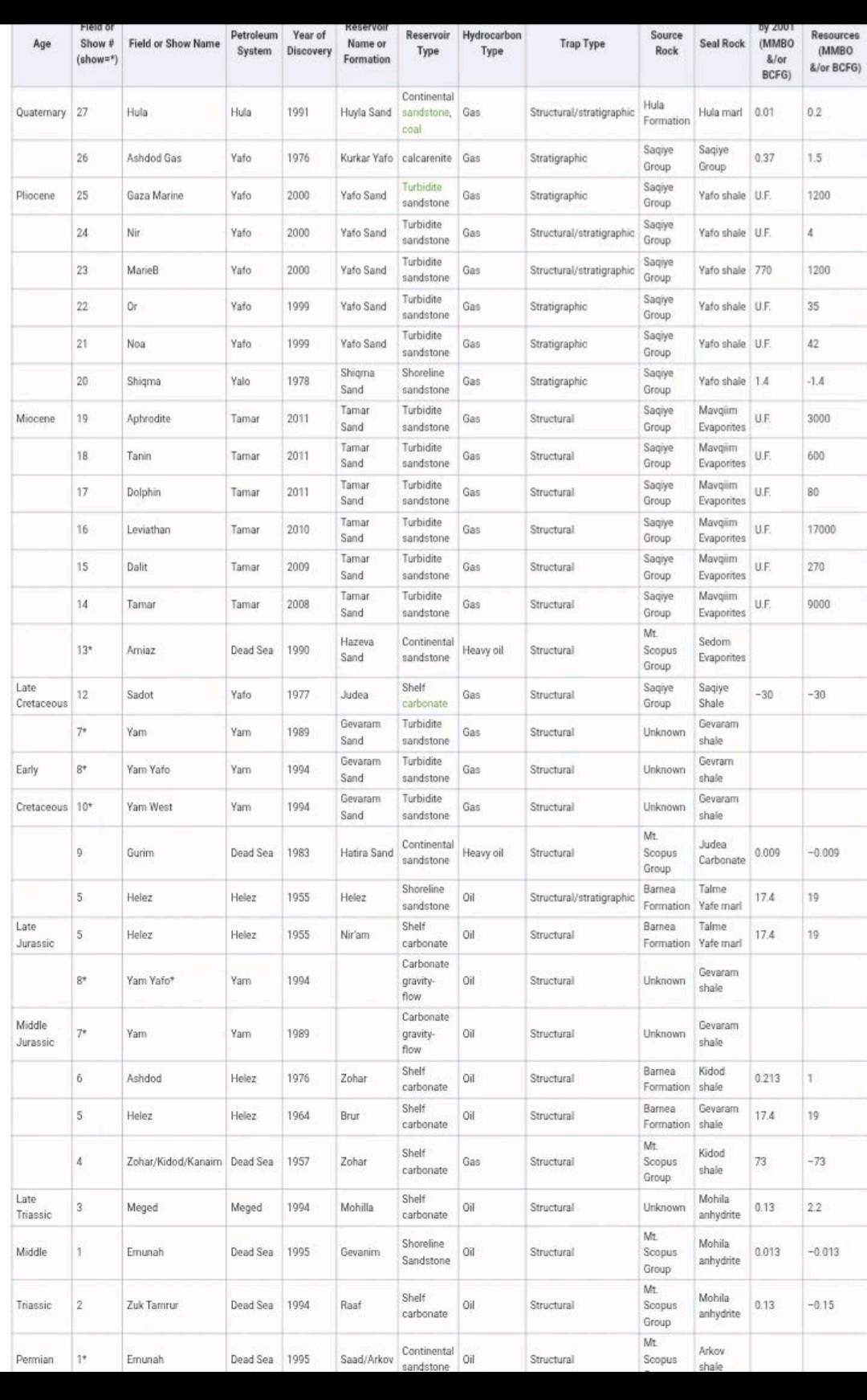
In the Galil Rift, oil has been produced from the Triassic Mohilla Formation, notably from the Meged discovery. Reservoir quality is best in high-energy carbonate grainstones, while deeper Triassic dolomites exhibit poorer properties.
The southern platform domain hosts modest but proven oil accumulations within Lower Cretaceous sandstones and Jurassic–Cretaceous carbonates along the hinge zone, including the Heletz and Khokhav trends.
Within the Dead Sea Rift, oil and bitumen occurrences are associated with Permian–Triassic carbonates and sandstones, with additional potential in syn- and post-rift clastic sequences.
Offshore Geology – Levantine Basin
Offshore, the region overlies the Levantine Basin, where sediment thickness exceeds 15 km basinward. Basin evolution includes Jurassic rifting, Late Cretaceous inversion, Messinian evaporite deposition, and widespread Miocene–Pliocene clastic systems.
Offshore Petroleum Plays
Nearshore areas contain oil-bearing Jurassic–Triassic carbonates and Lower Cretaceous submarine fan sandstones. The main exploration success, however, lies in Miocene and Pliocene sandstones, deposited in channel and basin-floor fan settings.
The most significant discoveries occur within Lower Miocene sub-salt sandstones, where large gas accumulations have been proven in deep-water channel-fill and fan systems, redefining the regional energy potential.
Conclusion
The Eastern Mediterranean Region hosts multiple working petroleum systems across structurally complex onshore domains and a world-class offshore gas province. While onshore plays are mature and localized, the deep-water Levantine Basin continues to deliver high-impact gas discoveries, confirming the region’s role as a strategically important Eastern Mediterranean energy hub.