

Country Overview Series | Upstream Geology of Lebanon
by Dr. Mohamed Basyouni
Geologic and Tectonic Setting
Lebanon lies at the eastern Mediterranean, part of the complex Levantine margin. Situated between the African, Arabian, and Eurasian plates, convergence and strike-slip motion along the Dead Sea Transform (DST) shape its geology. The Lebanon Mountain Range and Bekaa Valley reflect this activity. The region features fold-and-thrust belts, extensional basins, and offshore sedimentary depocenters, key for hydrocarbon prospectivity.
Sedimentary Basins and Hydrocarbon Potential
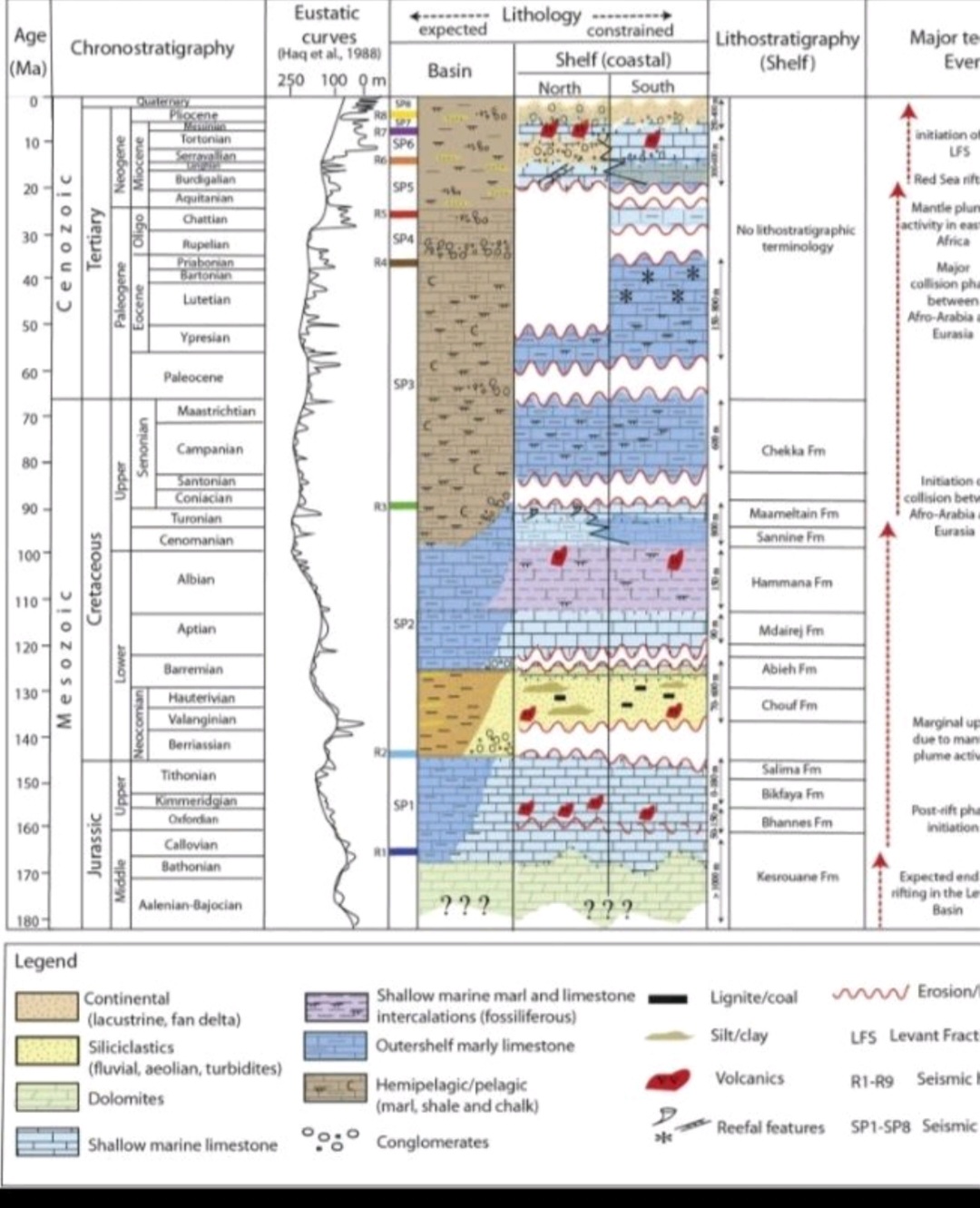
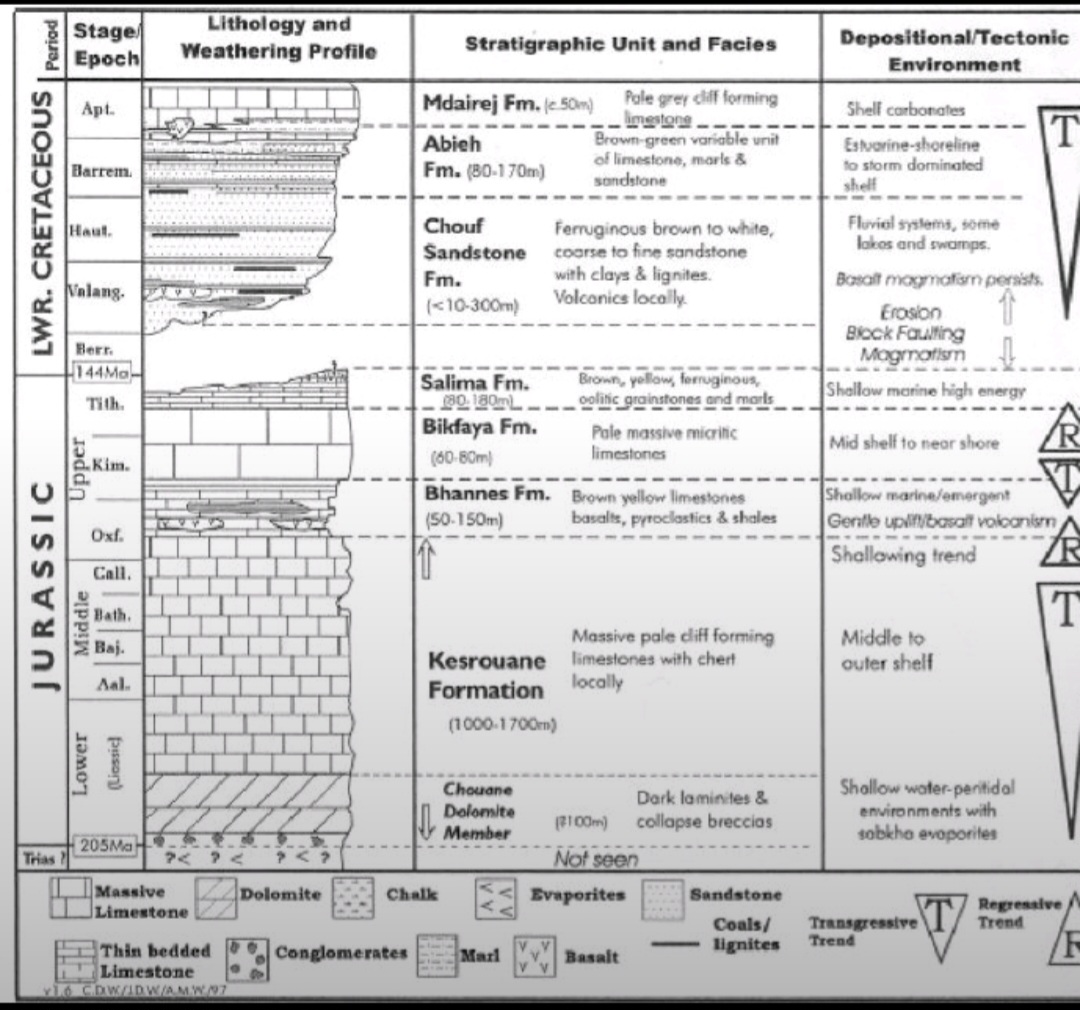
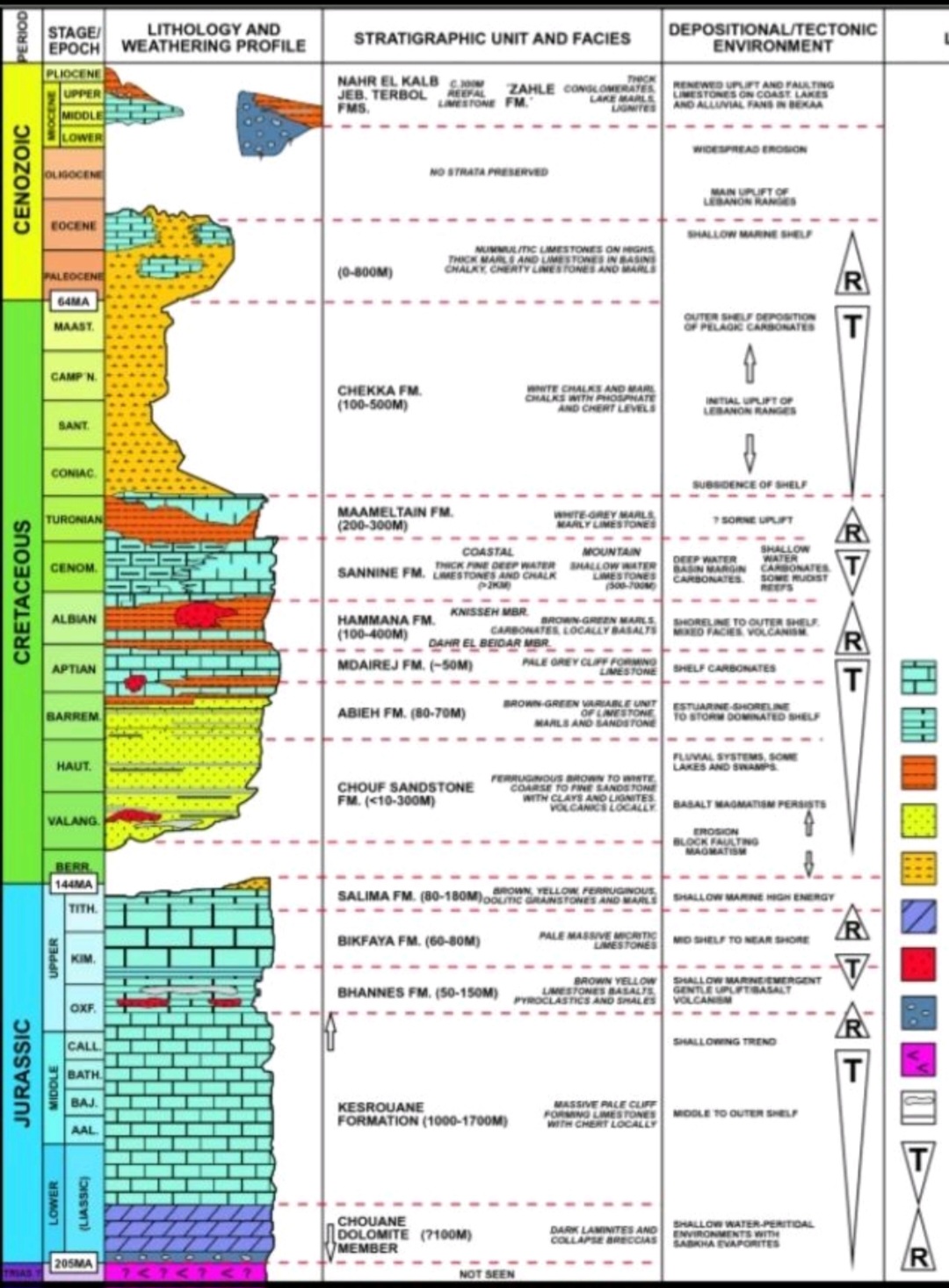
Lebanon’s sedimentary cover is mainly Cenozoic–Mesozoic, with source, reservoir, and seal formations offshore and in limited onshore depressions:
1. Lebanon Offshore (Mediterranean Shelf)
o Shallow and deep-water depressions host Miocene–Pliocene turbidites, Paleocene–Eocene carbonates, and Late Cretaceous shales.
o Recent exploration shows significant gas potential, similar to Israel and Cyprus offshore fields.
2. Bekaa Valley
o Narrow extensional basin between Mount Lebanon and Anti-Lebanon ranges.
o Neogene–Quaternary alluvial and lacustrine deposits; limited hydrocarbon potential due to structural complexity.
3. Northern & Southern Onshore Zones
o Folded Mesozoic carbonates and Cenozoic clastics may act as fractured reservoirs.
o Impermeable marls and evaporites provide seals in isolated structures.
Key Geological Features
• DST: Controls basin development and traps.
• Lebanon Thrust Belt: Controls structural traps in carbonates.
• Offshore Levant Basin: Lebanon shares petroleum systems with Israel, Cyprus, and Syria.
Exploration Status
• Onshore exploration is limited; few marginal discoveries, no commercial production.
• Offshore licensing has attracted international operators for deepwater gas plays.
• Exploration continues in deepwater turbidites and Miocene–Pliocene plays with modern seismic imaging.
Summary
Lebanon’s upstream geology features active tectonics, fold-and-thrust belts, extensional basins, and offshore depocenters. Onshore potential is modest, but offshore offers high-prospect gas plays within the Levant Basin. Lebanon’s location along the DST and Levantine margin makes it an emerging frontier for deepwater exploration.

……
Follow Dr. Mohamed Basyouni for more insights on upstream geology, petroleum systems, and frontier exploration opportunities.
Contact for collaboration, discussion, or consultancy in oil & gas exploration:
📧 mhmdbasyouni@gmail.com |🔗 LinkedIn: linkedin.com/in/mhmdbasyouni